For the search phrase “text editor MacBook novel,” begin with one rule: compare layouts by manuscript width and reference-retrieval errors rather than pane count. The controlled case is one 5,000-Japanese-character chapter, a character sheet, and a chronology on a 13-inch-equivalent MacBook screen. A pass must demonstrate this outcome: complete the article-specific sample with separate evidence for manuscript width, retrieval time, wrong-file count, layout recovery, restart. The excluded range is stated separately: external monitors, iPad use, collaborative editing, and device-performance rankings.
Decision: Compare layouts by manuscript width and reference-retrieval errors rather than pane count
Use every required field as a blocker. A candidate with an unverified manuscript width or restart stays on hold, even if its unrelated features look attractive.
The article-specific evidence card has these fields: manuscript width, retrieval time, wrong-file count, layout recovery, restart. Do not count the following excluded range as evidence: external monitors, iPad use, collaborative editing, and device-performance rankings.
The exact sample and its return path
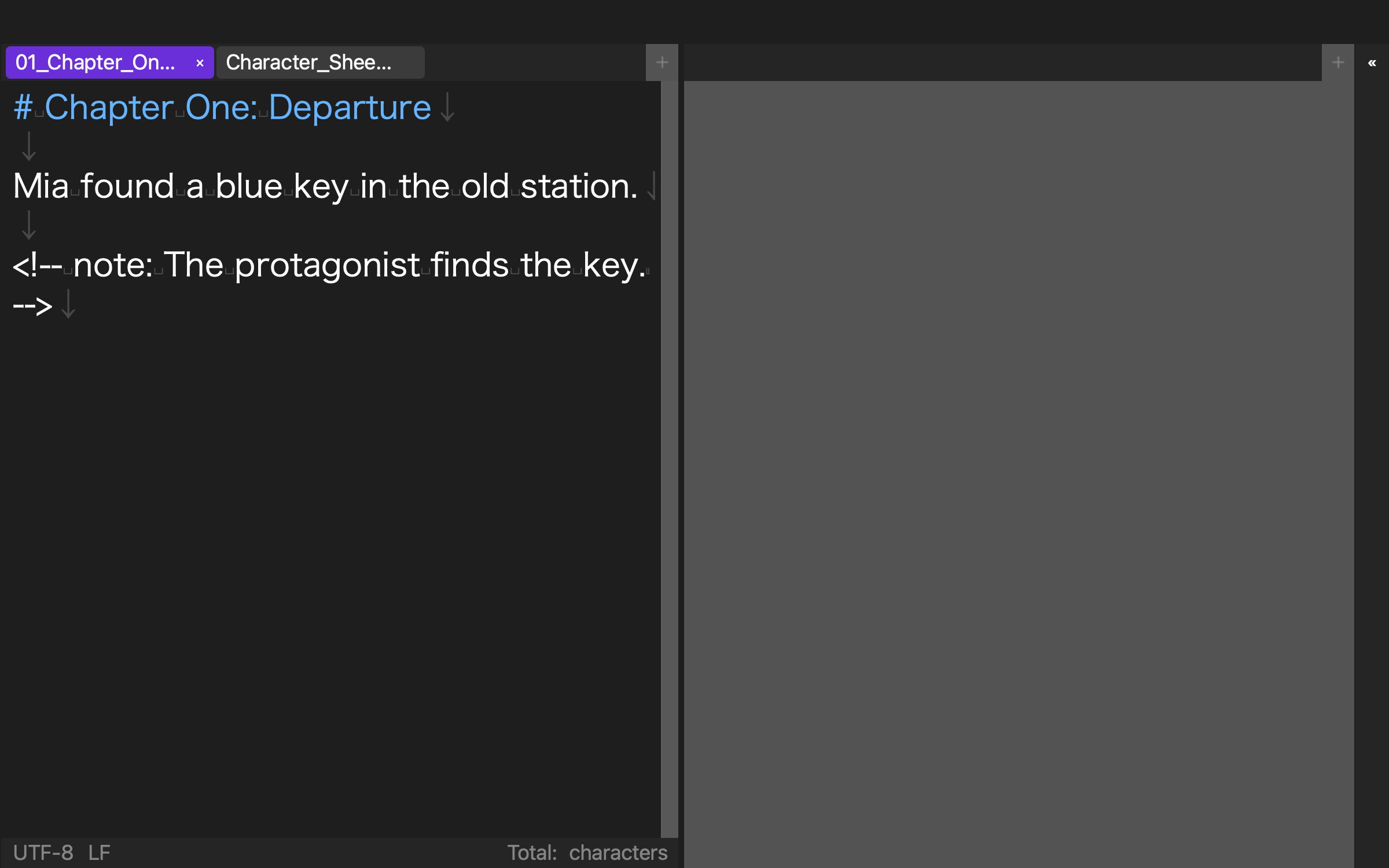
Compare two layouts using one 5,000-Japanese-character chapter, a character sheet, and a chronology on a 13-inch-equivalent MacBook screen. Keep manuscript width primary, run five reference-retrieval tasks, count wrong-file openings, and restore both writing and checking layouts after restart. A narrower draft pane, confusion between same-named references, or lost pane roles fails the setup.
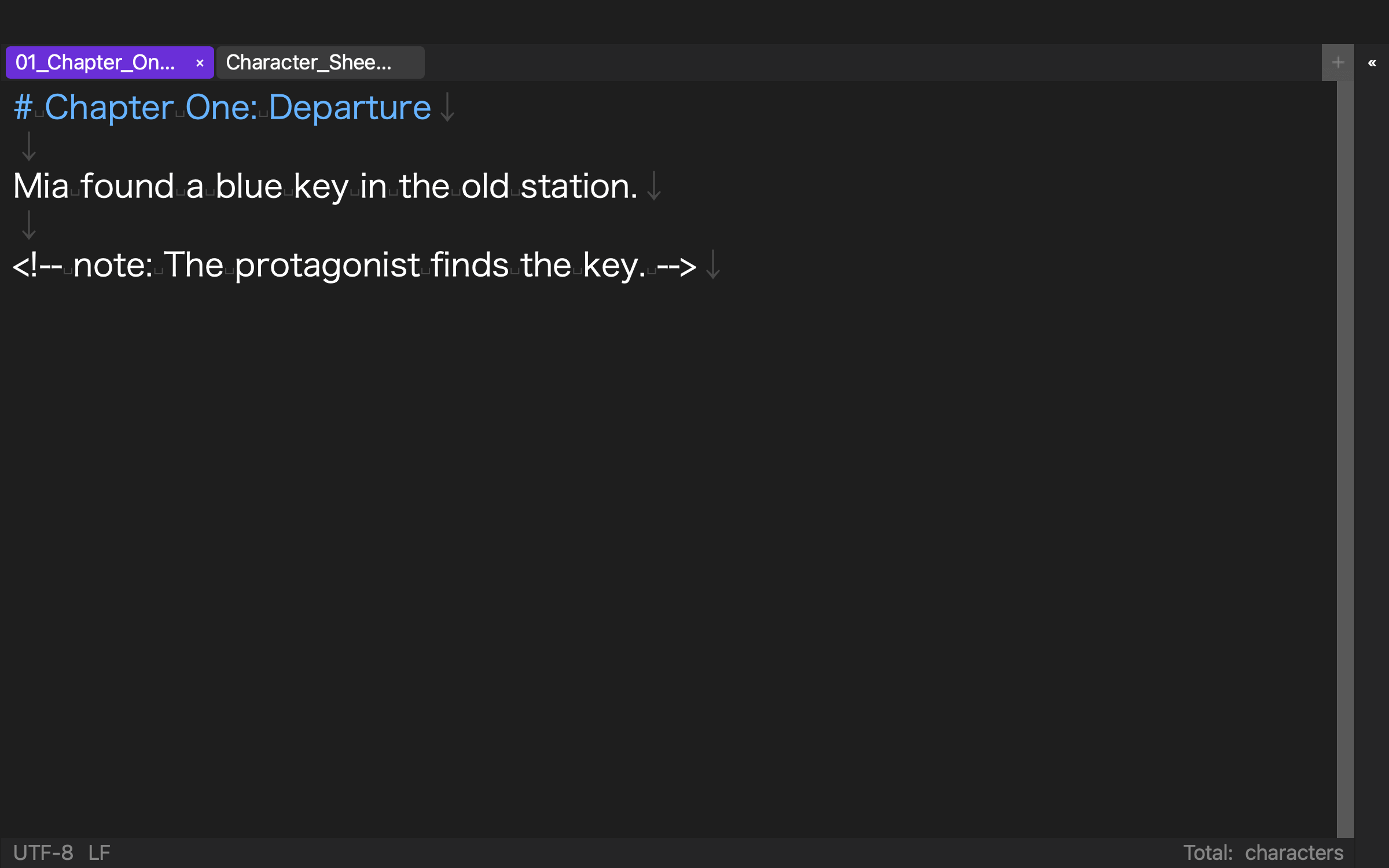
This case addresses the failure behind the search: losing the authoritative input or acceptance evidence while trying to compare layouts by manuscript width and reference-retrieval errors rather than pane count. Name the source, working copy, and delivered or reopened result so that another editor can locate each one without relying on a filename such as final.
Actions to record in sequence
Use the following product-independent sequence on the named sample. It is an acceptance method, not a claim that Rune Studio has already completed this particular case.
- 1. Declare writing and checking roles. Attach the observed manuscript width evidence to this step.
- 2. Keep the manuscript in the primary pane. Attach the observed retrieval time evidence to this step.
- 3. Place cast and chronology in reference panes. Attach the observed wrong-file count evidence to this step.
- 4. Run five retrieval tasks. Attach the observed layout recovery evidence to this step.
- 5. Restore both layouts after restart. Attach the observed restart evidence to this step.
Acceptance fields
Do not infer one row from another. Record pass, revision, or not tested beside the actual target, date, output path or artifact ID.
- Manuscript width — expected state: written before the run; hold the row if references make the manuscript too narrow.
- Retrieval time — expected state: written before the run; hold the row if a same-named reference is opened.
- Wrong-file count — expected state: written before the run; hold the row if pane roles are lost after restart.
- Layout recovery — expected state: written before the run; hold the row if references make the manuscript too narrow.
- Restart — expected state: written before the run; hold the row if a same-named reference is opened.
Where this workflow must stop
A second pass is meaningful only when its source and changed condition remain identifiable. Keep the earlier result and append the retest instead of replacing the failed row.
- 1. References make the manuscript too narrow; change only the responsible condition.
- 2. A same-named reference is opened; return to the named source.
- 3. Pane roles are lost after restart; preserve the failed artifact.
A product check without a performance claim
Current product documentation covers capabilities relevant when you need to test manuscript editing, reference access, preview, and EPUB export on a Mac. That scope can justify a trial, but it does not show that one 5,000-Japanese-character chapter, a character sheet, and a chronology on a 13-inch-equivalent MacBook screen passed this article's acceptance card.
Rune Studio is a plausible candidate when fewer source, setting, or reference handoffs help you compare layouts by manuscript width and reference-retrieval errors rather than pane count. Use another tool or destination check for the excluded range stated here: external monitors, iPad use, collaborative editing, and device-performance rankings.
The decision to keep
For the search phrase “text editor MacBook novel,” the conclusion is to compare layouts by manuscript width and reference-retrieval errors rather than pane count. The result is accepted only when the record establishes this outcome: complete the article-specific sample with separate evidence for manuscript width, retrieval time, wrong-file count, layout recovery, restart.
Begin here: define two layouts and five reference-retrieval tasks. If references make the manuscript too narrow, stop at that row and return to its source. Check the Rune Studio product page for the current Mac feature scope before applying the same acceptance card to a product trial.