Do not choose a Mac EPUB editing app because it produced one successful EPUB. A long project must survive an operating-system update, a day without network access, a folder recovery, and eventually a move away from the application. The useful question is whether you can still locate and recover the manuscript and generated assets.
This is not another six-feature creation-loop test for manuscript editing, preview, metadata, table of contents, cover, and inspection. It scores the lifespan of the project environment on one Mac: operating-system evidence, source-of-truth location, connection dependency, folder recovery, and assets recoverable without the app.
Check the operating-system evidence
Record the candidate’s minimum macOS version, processor requirements, distribution source, update method, and any documented export path when a version is no longer supported. “Available for Mac” is too broad for a purchase decision.
Compare the requirement with the Mac you use now and the likely operating system on a replacement machine. You cannot prove future compatibility. You can verify whether the vendor publishes a current requirement and an update history that you can revisit.
The current published requirement for rune Studio’s Mac version is macOS 13 or later. This is a statement about the current version, not a promise of compatibility with an unreleased operating system.
Explain the source of truth in Finder
Create a harmless two-chapter project. Make a table that identifies the manuscript source, original images, metadata and chapter-order settings, and generated EPUB. Record actual folders or files visible in Finder, not only labels displayed inside the application.
Answer four questions:
- Which file is edited when the manuscript changes?
- Where are the original cover and illustration files?
- Where are metadata and chapter-order decisions preserved?
- Where can the generated EPUB be recovered?
If the app imports content into a private library, document the relationship between imported and original files and the procedure for exporting the editable source. Finder visibility alone does not create a backup, but an unexplained location makes backup and recovery impossible to design.
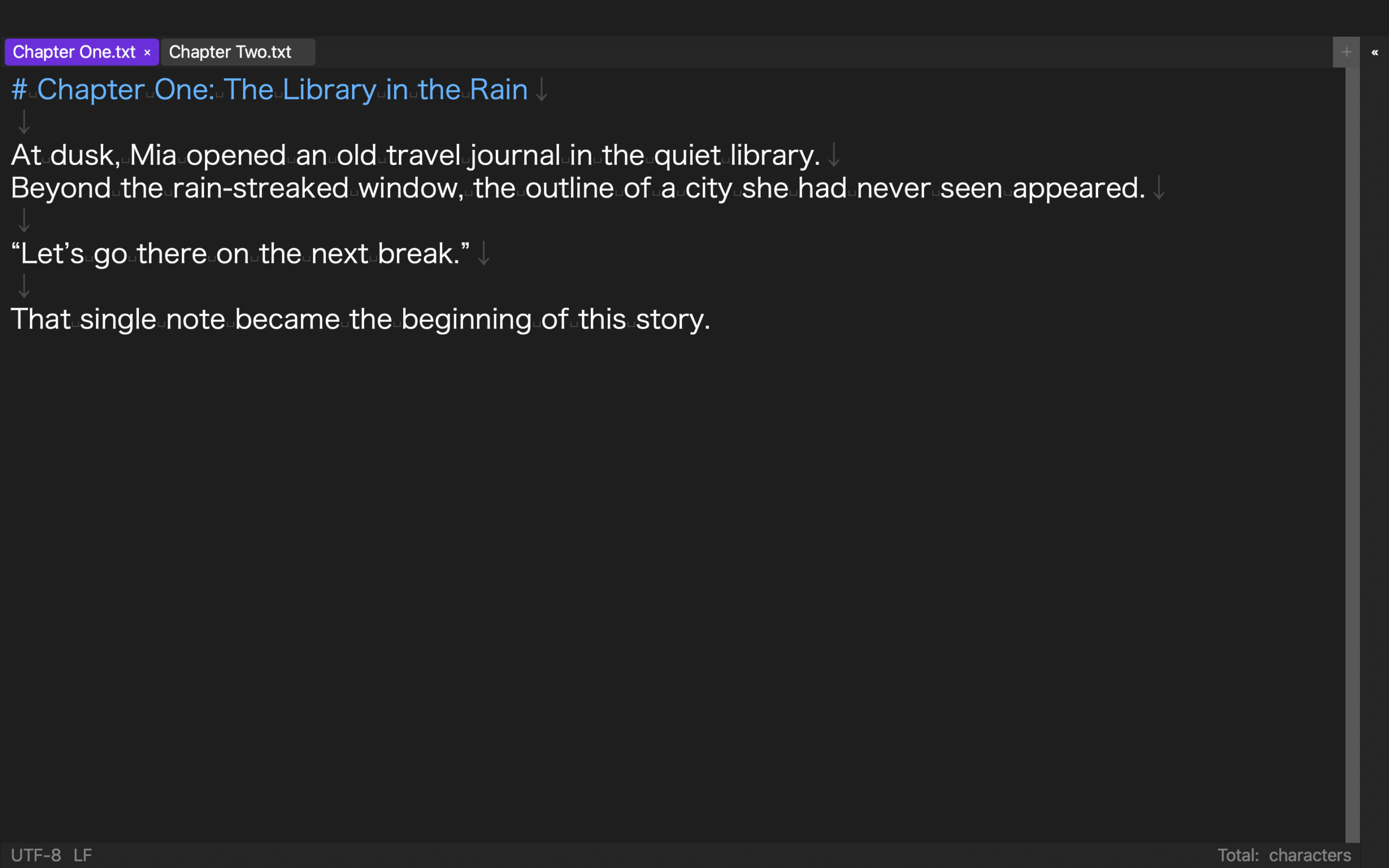
An existing rune Studio test created a folder-based workspace and recorded a Finder-visible folder and file tree. That evidence supports the bounded statement that the test project had an explainable folder location. It does not verify Finder usability, automatic synchronization, or backup behavior.
Map what remains possible without a connection
Within the candidate’s license and terms, model a period without network access. Open a project that is already stored, change one sentence, inspect one metadata field, and attempt a differently named EPUB export.
Do not force an offline test on a service that explicitly requires a connection. Instead, map which stage needs login, license validation, cloud access, or online generation. Grade the remaining capability as open only, edit, or edit and regenerate. Knowing the boundary lets you prepare a deadline fallback.
Keep this result separate from attractive preview quality. The criterion is whether ownership and work continuity are understandable when the connection is unavailable.
Recover from a different folder
Close the test project and duplicate the complete project into another test folder. Leave the original untouched. Open only the copy, modify a sentence, inspect image and chapter-order references, and generate an EPUB under a new name.
This is a same-Mac recovery test, not a transfer to a new computer. It detects absolute paths, app-only identifiers, and hidden references back to the original folder. After the export, verify that timestamps in the original folder did not change. Otherwise you may believe that the copy is independent while still editing the source.
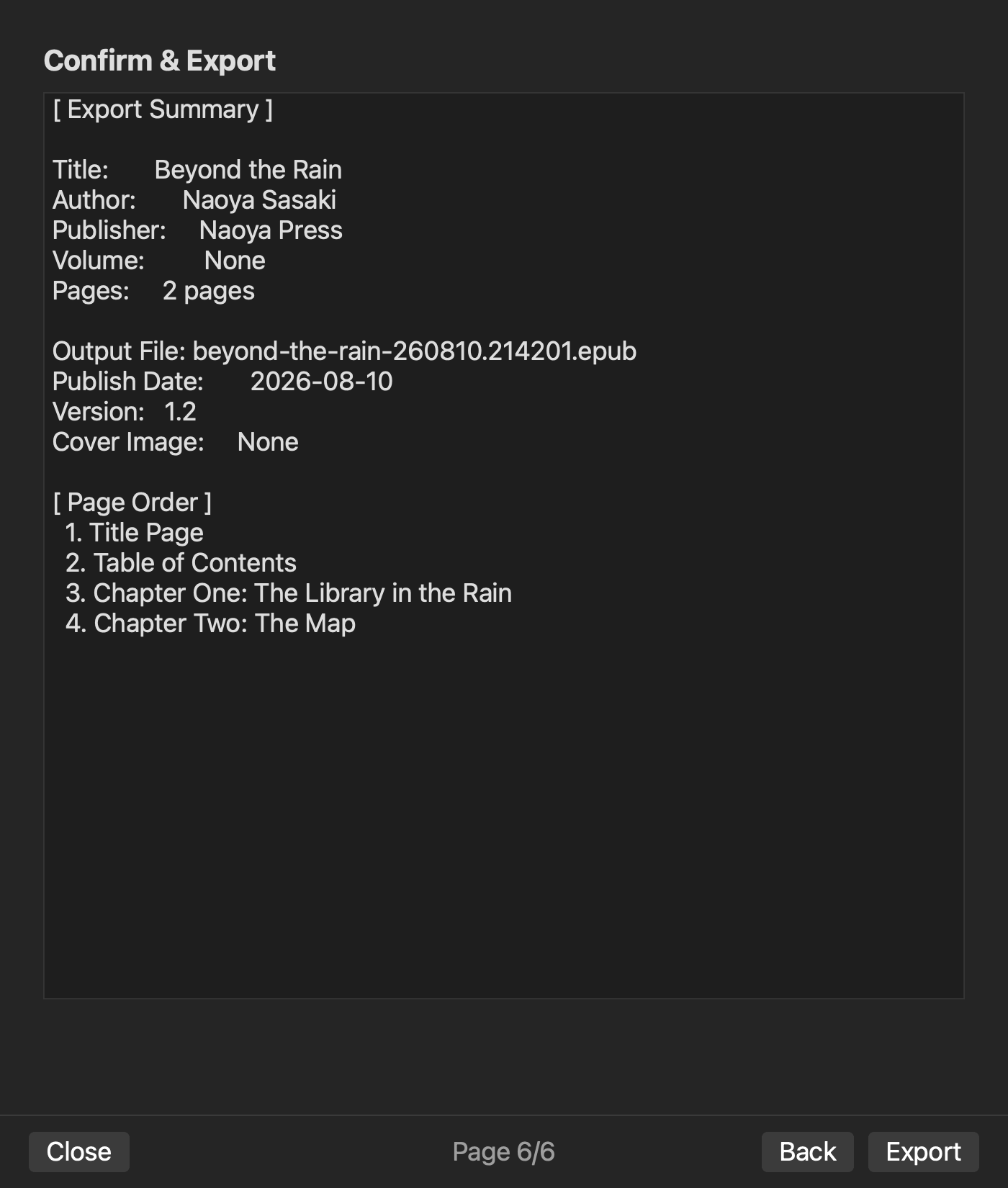
In a separate existing rune Studio operation, a two-chapter project received title, author, volume, edition, publication date, writing direction, and chapter order. It generated a 5,444-byte EPUB with exit code 0; inspection reported nav and NCX present and zero issues. These values support generation and internal inspection only. They do not prove offline operation or survival across an OS upgrade.
Count assets recoverable without the app
You do not need to uninstall the candidate. Close it and inventory what would remain usable without opening it: manuscript files, original images, a readable record of settings, generated EPUB, chosen app version, and recovery instructions.
For decisions stored only in a proprietary format, check whether they can be exported to an exchange format or a human-readable record. Recovering only the final EPUB is insufficient when the next correction requires the editable source. Manuscript, assets, and a settings record preserve the option to rebuild in another environment.
Also record what is deliberately excluded. Store accounts, pricing, sales territories, and retailer categories are not necessarily EPUB metadata and should not be assumed to live in the editing app.
Score five recoverability criteria
Score operating-system evidence, source location, no-connection capability, different-folder recovery, and app-independent assets from A to D. A means that you reproduced the location or recovery yourself. B means it works with a manual note. C means part of the project depends on the app or connection. D means the source of truth or recovery path cannot be explained.
Do not let numerous creation features compensate for a D. Put that candidate on hold. For B and C, record the dependency, backup frequency, and fallback. This recoverability floor protects your ability to revise the book after the first publication.
Choose by the return path
Compare a Mac EPUB editing app by published OS requirements, an explainable source of truth, work that remains possible without a connection, recovery from another folder, and assets you can retrieve without the app. Use only a two-chapter fixture and preserve the original throughout the test.
Producing an EPUB once and retaining the right to revise the book years later are different outcomes. Identify the missing return path first, then send only recoverable candidates into the detailed creation-feature comparison.