Choose a novel text editor by testing what happens after an overnight interruption. This article does not reward the longest feature list. It asks whether the candidate can return to the correct chapter, writing layout, and EPUB configuration record the next day. Close with three identifiers—C07/revise, DRAFT-3, and EPUB-R2—and keep only a candidate that reconstructs all three.
This is a candidate test, not a project-design guide
STUDIO-338 explains how to design separate sources of truth for a chapter index, display presets, and EPUB settings. Here, that existing design becomes the input to an editor comparison.
Score five results separately: correct chapter source, correct reading order, restored writing display, identified EPUB settings record, and recovery of the next action. A candidate does not receive a passing average when one layer points to the wrong source.
Give every candidate the same three layers
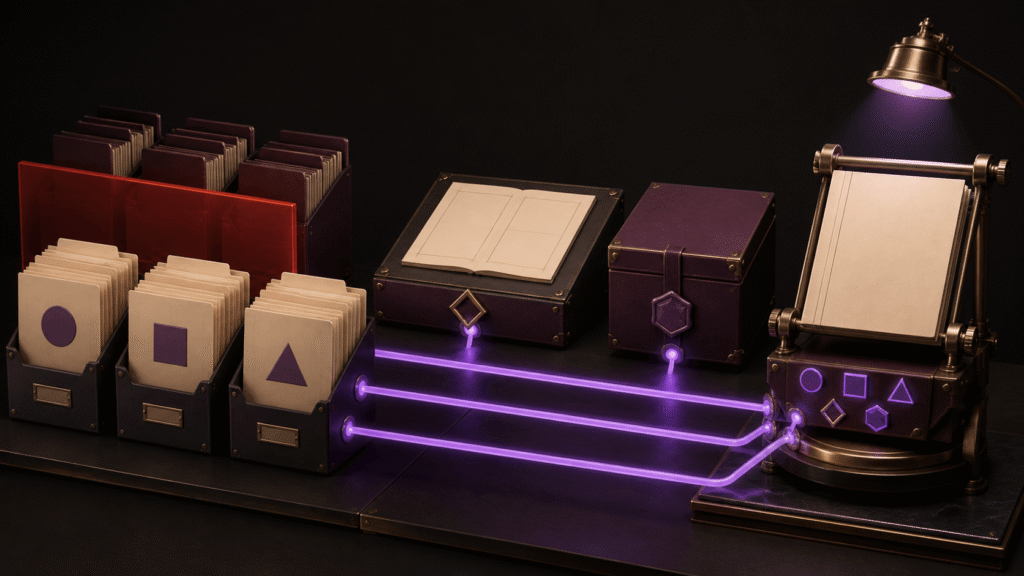
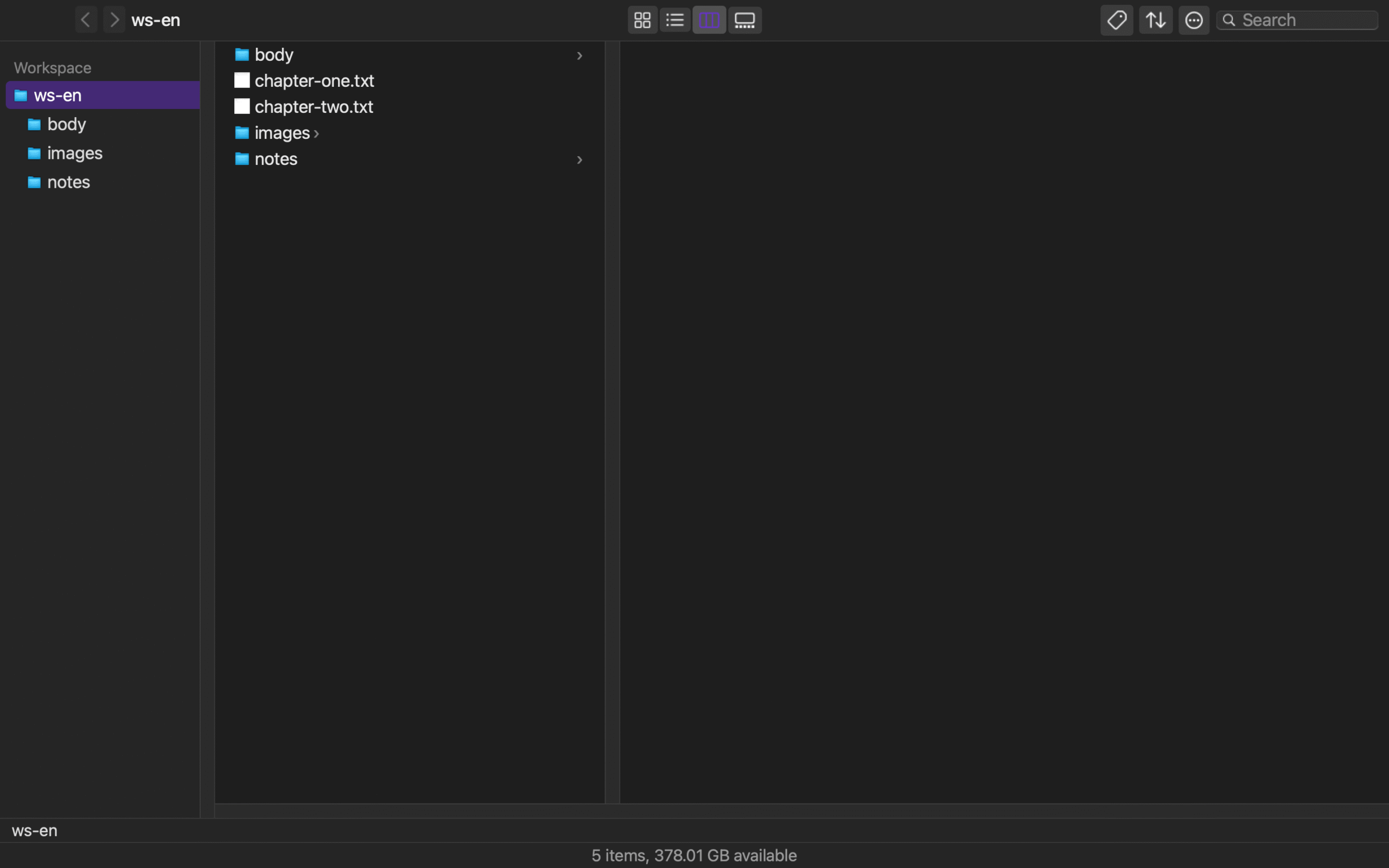
Prepare copies of three chapters, one writing layout, and one temporary EPUB record. Label chapters C05, C06, and C07 and give each a state such as draft, revise, or approved. Name layouts by purpose, such as DRAFT-3 and READ-1. Keep export conditions under a different identifier such as EPUB-R2.
Do not call every item settings. C07 is manuscript identity, DRAFT-3 is screen arrangement, and EPUB-R2 is an export record. A saved layout is not manuscript version history and is not a backup of publication metadata.
Candidate A and candidate B must receive the same files, identifiers, and starting position. Changing the index method for one candidate would mix procedure differences with product differences.
Close with all three identifiers
On day one, open C07 in revise state, use DRAFT-3, and associate the work with EPUB-R2. Before quitting, leave a line such as:
Chapter=C07/revise; display=DRAFT-3; export=EPUB-R2; next=check one paragraph of dialogue motivation.
Include the chapter state, not only its filename. If two copies both claim to be the authoritative C07, stop the test. Guessing correctly the next day does not repair a duplicate source of truth.
Restore the layers separately
The next day, begin with the closeout card and index rather than relying only on automatic window restoration. Open C07/revise and confirm its neighbors in the chapter order. Restore DRAFT-3. Then locate EPUB-R2 as a separate record.
Success means all three identifiers match and the stated next action can begin immediately. C07 with READ-1 and EPUB-R1 is not close enough. The mismatch identifies which layer the candidate or procedure failed to carry across the interruption.
Recovery time can be recorded, but correctness comes first. An old chapter that opens instantly is worse than a deliberate route to the correct source.
Define disqualifying failures in advance
Failure one is two authoritative copies of the same chapter. Failure two is a layout name that does not reveal its purpose. Failure three is treating a pane layout as if it preserved EPUB settings.
Record the affected layer instead of writing that management feels difficult. That distinction shows whether a naming correction can solve the problem or whether the candidate lacks a needed scope.
Collaborative permissions, automated backup, and merge behavior are separate tests. Do not let their presence or absence change the overnight recovery result.
Keep the Rune Studio boundary explicit
Rune Studio has documented support for multiple tabs, split panes, and up to four named layouts. Those capabilities make it a candidate for switching between chapter work and stage-specific displays.
They are display-side capabilities. They do not establish manuscript version history, a complete EPUB-settings backup, or guaranteed next-day reconstruction. The current basis is Stage 3 documentation; the three-ID recovery row remains an illustrative test until it is run.
Reproduce one overnight interruption
Use only three copied chapters first. Close day one with C07/revise, DRAFT-3, and EPUB-R2. Rebuild each item from the index the next day. Advance a candidate only if all identifiers match, no duplicate source appears, and the next sentence can begin without guessing.
The conclusion is not a new project architecture. It is a selection result: whether an editor can carry an already separated chapter, display, and export system across a real interruption.