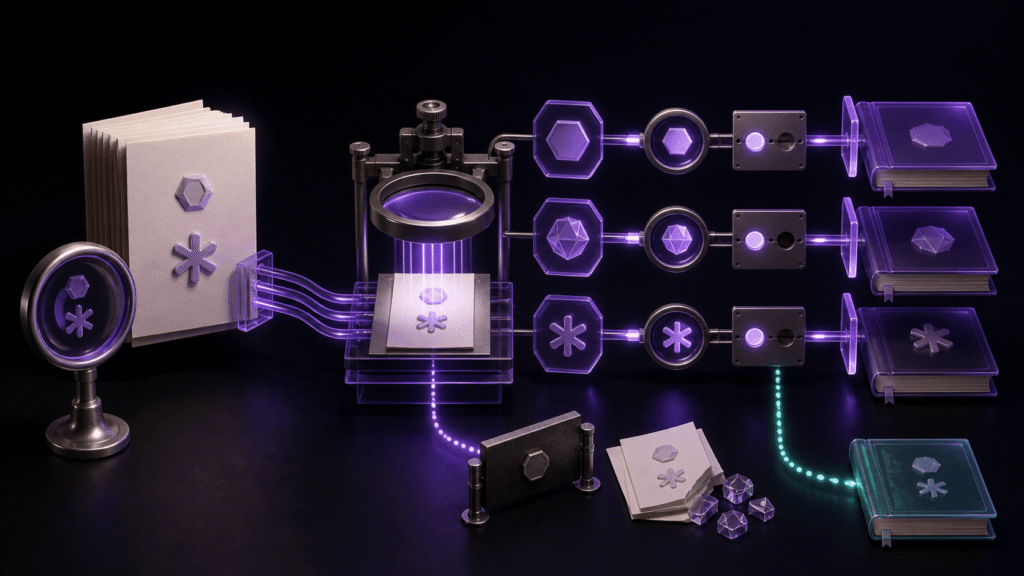
To prevent Japanese mojibake, identify the encoding used to read the file and the encoding required for the next save. Those are different decisions. A UTF-8 document can look perfect and still contain characters that cannot be represented in Shift_JIS.
This guide covers a handoff that requires a legacy Japanese encoding. It does not cover vertical typography or ruby rendering.
Record the source and destination
Write down the detected source encoding, line endings, required destination encoding, and the reason for conversion. If the recipient accepts UTF-8, avoiding conversion may be the safer answer.
Build a short test file containing ordinary kanji, a wave dash, a circled number, an emoji, and any uncommon character used by the manuscript. A small sample makes the first failing character easier to identify.
Stop before destructive saving
- Open the UTF-8 source and check both ends.
- Record the encoding and line endings.
- Choose the required output encoding on a copy.
- If the editor reports an unrepresentable character, do not overwrite the source.
- Agree on a substitute only when it does not change a name or meaning.
- Reopen the saved copy and compare the text.
Rune Studio’s documentation describes encoding detection and a safeguard that highlights unconvertible characters and stops saving. Tests completed for this guide confirm reading UTF-8/LF and finding zero unconvertible characters. It does not include a Shift_JIS failure case that triggered the warning and save block. The exact warning behavior is therefore not presented here as tested.
Recover when no warning appears
If the sample should fail but no warning appears, do not overwrite the manuscript. Save a separate copy, close it, reopen it, and compare the suspect strings. Use an independent encoding inspector when the receiving workflow provides one.
Never simplify a personal name or title merely to make conversion pass. Record any approved substitution so a later UTF-8 edition can restore the intended text.
Conclusion
Safe Japanese encoding work separates reading, destination encoding, and representability checks. Rune Studio’s documented warning and save block still need a deliberate failing-character test in testing so far. Begin with a short copy and a separate filename. Check Rune Studio’s Japanese text support